

James River Blog
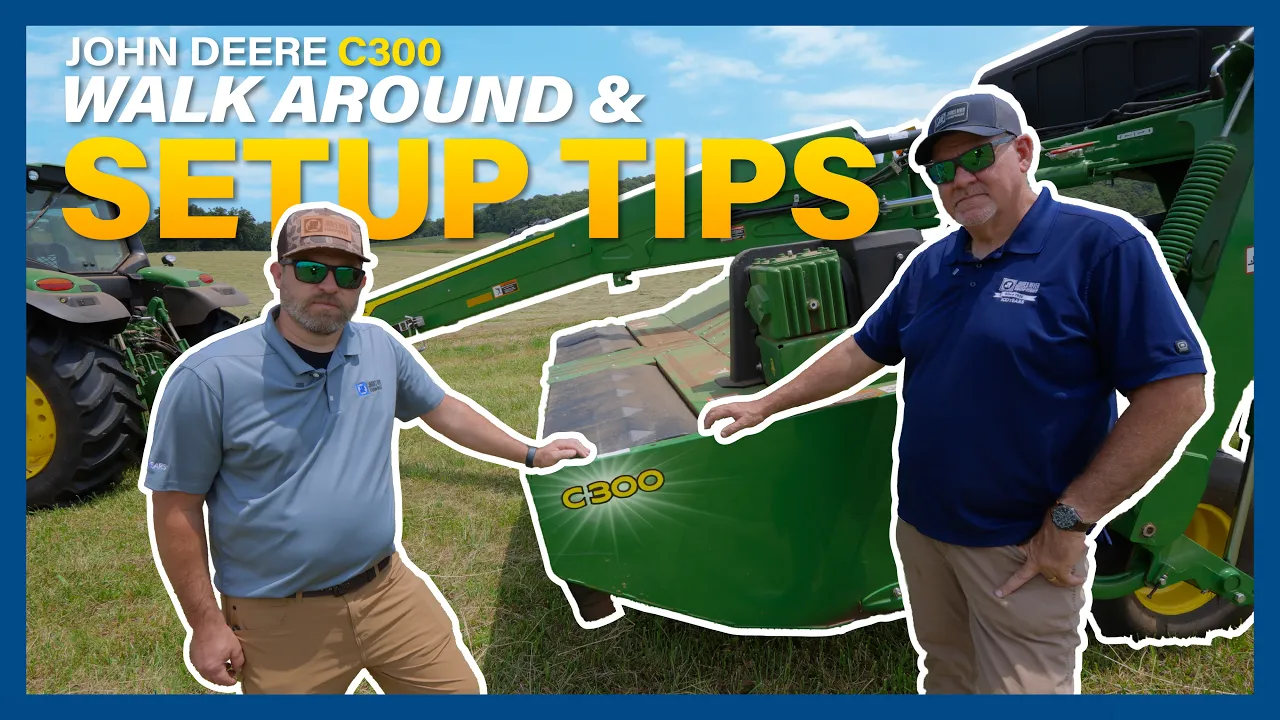
KRONE C300 Mower Conditioner Review
The KRONE C300 Mower Conditioner is built to help hay producers cut more acres efficiently while maintaining forage quality and reducing downtime. Its center pivot design, proven cutter bar technology, multiple conditioner options, and operator-friendly adjustments make it a versatile solution for a wide range of hay and forage operations.
At James River Equipment, we work with hay producers every season to help them improve harvesting efficiency and forage quality. In this walkthrough, we take a closer look at the KRONE C300's key features, explain how its conditioning systems work, and share practical considerations to help you determine whether it's the right fit for your operation.
What Makes the KRONE C300 Mower Conditioner Different?
The KRONE C300 combines cutting performance, operator convenience, and crop conditioning in a package designed to maximize productivity during tight harvest windows.
Key features include:
- 3-meter cutting width
- Center pivot design
- Easy drawbar hookup
- KRONE cutter bar technology
- Quick-change knife system
- Multiple blade configurations
- Roller or flail conditioner options
- Adjustable settings for various crop conditions
These features are designed to help producers cover more ground while maintaining consistent cut quality across changing field conditions.
Why Do Many Producers Choose a 3-Meter Mower Conditioner?
A 3-meter cutting width offers a balance between productivity and maneuverability.
For many hay operations, this width provides:
- Efficient field coverage
- Better transport convenience
- Compatibility with a wide range of tractor sizes
- Improved productivity without excessive machine weight
Whether you're harvesting grass hay, mixed forage, or alfalfa, a 3-meter mower conditioner can provide the capacity many operations need without sacrificing versatility.
How Does the KRONE Center Pivot Design Improve Efficiency?
One of the most notable features of the KRONE C300 is its center pivot design.
This configuration allows operators to:
- Work efficiently on either side of the tractor
- Improve field maneuverability
- Follow field contours more effectively
- Optimize mowing patterns in irregularly shaped fields
For producers working across multiple properties or varying field layouts, the center pivot design can simplify operation and improve overall productivity.
KRONE Cutter Bar Technology Explained
The cutter bar is one of the most important components of any mower conditioner.
KRONE's cutter bar design is engineered to deliver:
- Consistent cutting performance
- Smooth crop flow
- Clean cutting action
- Reliable operation in challenging field conditions
A clean, uniform cut is critical for encouraging healthy crop regrowth and preserving forage quality throughout the harvest process.
At James River Equipment, our service technicians regularly support forage equipment across a variety of crops and conditions, giving us firsthand experience with the performance characteristics producers rely on during hay season.
Quick-Change Knife System: Less Time in the Shop, More Time in the Field
When harvesting conditions are ideal, every minute counts.
The KRONE quick-change knife system helps reduce maintenance time by allowing operators to replace knives quickly and efficiently.
Benefits include:
- Faster knife replacement
- Reduced maintenance downtime
- Improved cutting performance
- Easier routine service
Keeping sharp knives installed helps maintain cut quality and can reduce stress on the mower during operation.
Roller vs. Flail Conditioner: Which Option Is Right for Your Operation?
Selecting the appropriate conditioner is one of the most important decisions when purchasing a mower conditioner.
The best choice depends largely on crop type, harvest goals, and drying conditions.
When Should You Choose a Roller Conditioner?
Roller conditioners are commonly preferred for delicate crops such as:
- Alfalfa
- Clover
- High-value legumes
Benefits of roller conditioners include:
- Gentler crop handling
- Reduced leaf loss
- Improved forage quality retention
- Better protection of valuable feed nutrients
Producers focused on preserving leaf quality often find roller conditioners to be the preferred solution.
When Should You Choose a Flail Conditioner?
Flail conditioners are frequently selected for:
- Grass hay
- Mixed forage crops
- Heavy-volume crop conditions
Benefits include:
- Aggressive conditioning action
- Faster dry-down potential
- Excellent performance in dense crops
- Increased flexibility across forage types
For operations harvesting primarily grass hay, a flail conditioner may provide the performance needed to meet demanding harvest schedules.
How Do You Adjust the KRONE C300 for Different Field Conditions?
Field conditions can change throughout the season and even throughout the day.
The KRONE C300 offers adjustment capabilities that help operators optimize performance based on:
- Crop type
- Crop maturity
- Yield levels
- Ground conditions
- Desired drying time
Making proper adjustments can help improve:
- Cut quality
- Conditioning effectiveness
- Fuel efficiency
- Overall harvesting productivity
Our equipment specialists regularly work with producers to fine-tune mower setups for their specific crops and field conditions, helping them get the most from their forage equipment investment.
How Does the KRONE C300 Help Reduce Harvest Downtime?
Downtime during hay season can quickly impact forage quality and harvest schedules.
The KRONE C300 incorporates features designed to keep operators productive, including:
- Quick-change knife technology
- Durable cutter bar construction
- Simplified service points
- Straightforward machine adjustments
These design elements help producers spend more time harvesting and less time making repairs or performing routine maintenance.
Is the KRONE C300 Mower Conditioner Right for Your Operation?
If you're looking for a mower conditioner that combines cutting performance, reliable conditioning, and operator-friendly features, the KRONE C300 deserves consideration.
It may be an excellent fit for producers who want:
- Efficient 3-meter cutting capacity
- Flexible conditioner options
- Simplified maintenance
- High-quality forage production
- Improved harvesting efficiency
At James River Equipment, we help producers evaluate forage equipment based on acreage, crop type, drying goals, and overall harvest strategy. Choosing the right mower conditioner starts with understanding your operation's specific needs and matching equipment capabilities to those requirements.
Common Questions About the KRONE C300 Mower Conditioner
What is the cutting width of the KRONE C300?
The KRONE C300 features a 3-meter cutting width, providing a strong balance of productivity, maneuverability, and transport convenience.
What is the advantage of a center pivot mower conditioner?
A center pivot design allows operators to mow efficiently on either side of the tractor, improving flexibility and field efficiency, especially in irregularly shaped fields.
Should I choose a roller or flail conditioner?
Roller conditioners are typically preferred for alfalfa and other delicate crops, while flail conditioners are often better suited for grass hay and heavier forage conditions.
Does the KRONE C300 have a quick-change knife system?
Yes. The quick-change knife system allows operators to replace knives quickly, reducing maintenance time and helping maintain optimal cutting performance.
How does the KRONE C300 improve forage quality?
The combination of clean cutting action, adjustable conditioning options, and proper crop handling helps promote faster dry-down and better forage preservation.
Is the KRONE C300 a good option for hay producers?
For many hay and forage operations, the KRONE C300 offers a strong combination of productivity, versatility, and ease of operation, making it a popular choice for producers focused on harvesting efficiency and forage quality.
Go Back to List
- Blog Archive
- John Deere AutoTrac(TM) Vision 2.0: Smarter Spraying, Better Visibility, and Increased Productivity
- Standard 3-Point Hitch vs. John Deere iMatch vs. Telescoping Draft Links: Which Setup Is Best?
- John Deere Riding Mower Comparison: S100, S200, X300, X500, and X700 Series
- John Deere 1023E vs. 1025R: Which 1 Series Tractor Is Right for You?
- KRONE Vendro 560 Tedder: Features, Benefits, and Is It the Right Tedder for Your Farm?
- Custom John Deere 5120M Outlaw Tractor: Built for Steep Slopes, Rough Terrain, and Extreme Off-Road Work
- How to Remove and Reinstall the Front Loader on a John Deere 2025R
- Join Our Team: James River Equipment Job Previews
- KRONE C300 Mower Conditioner Review
- John Deere V452M Round Baler: What Makes It Different?
- James River Equipment Relocates Asheville Operations to New Mills River Facility
- Trimble Technology Outlet at James River Equipment
- Ask a Pro: Construction Equipment FAQs
- Inside The James River Equipment Parts Team
- JRE Rents Introduction