

James River Blog
Customer Spotlight Paige Sawmill & Forest Products
Customer Spotlight: Paige Sawmill & Forest Products
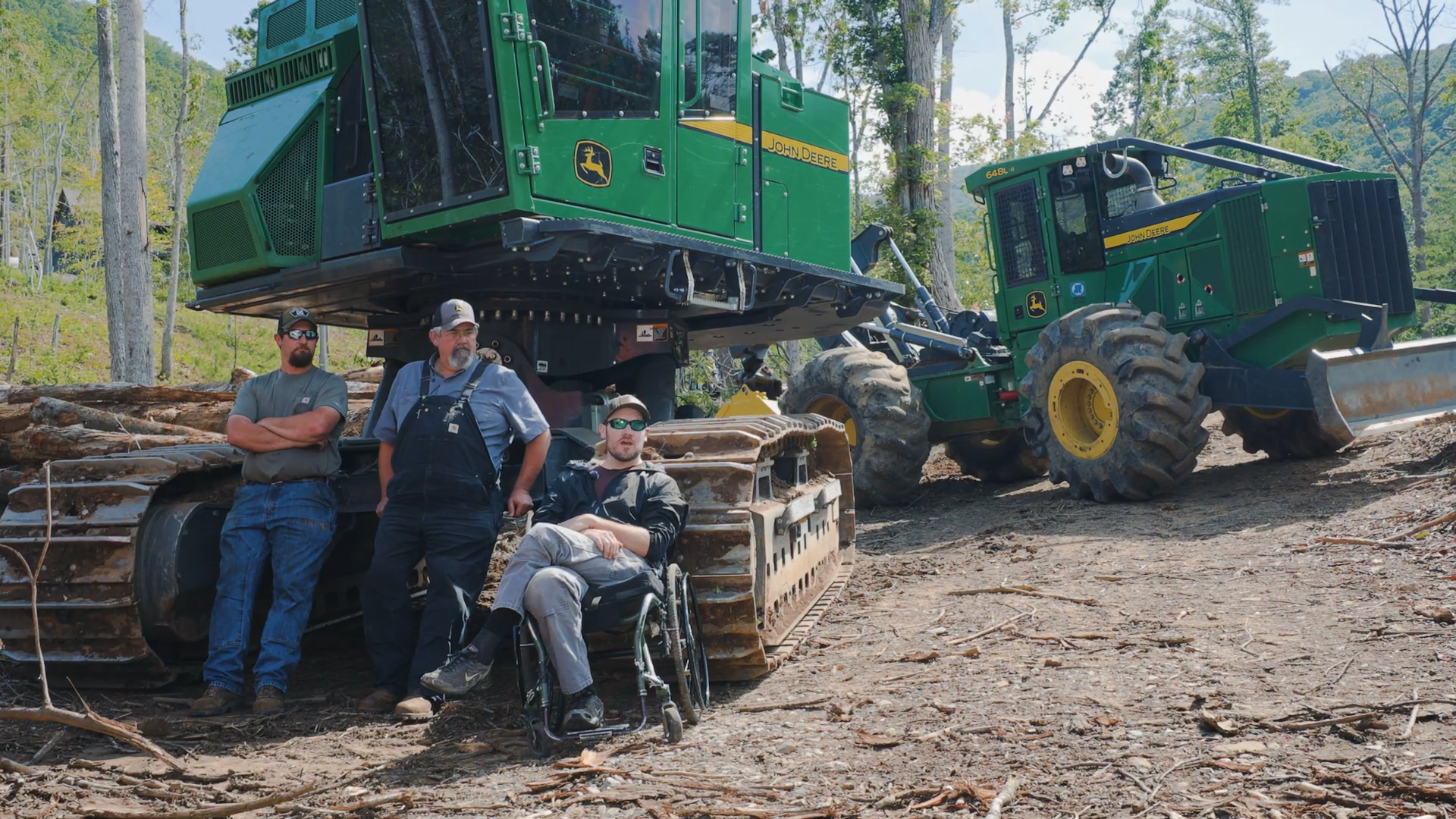
Mechanizing for the Future with James River Equipment by Their Side
Paige Sawmill & Forest Products modernized their forestry operation to improve safety, reduce downtime, and respond quickly to large-scale disaster recovery in Western North Carolina. With hands-on support from James River Equipment, the Paige family transitioned to fully mechanized logging and mobilized rapidly after Hurricane Helene—keeping their crews safe and their operation moving forward when it mattered most.
Who Is Paige Sawmill & Forest Products?
Paige Sawmill & Forest Products is a multi-generation forestry operation led by Jake, Scott, and Zach Paige. Like many family-run logging businesses, their success has been built on adaptability, hard work, and the ability to make difficult decisions when conditions change.
We’ve had the opportunity to work alongside the Paige family for several years, supporting their growth with forestry equipment, planning, and service expertise tailored to their operation.
How Did the Partnership with James River Equipment Begin?
The relationship started with a leased mini excavator through Mark Rymer, a James River Equipment forestry equipment specialist with deep experience supporting regional logging operations. That initial lease created a foundation of trust.
By 2021, Paige Sawmill transitioned from leasing to purchasing equipment, marking a shift toward long-term mechanization and operational efficiency.
From the beginning, our role wasn’t just supplying equipment. It was helping evaluate the right machines, availability timelines, and support resources to match their terrain, workload, and safety goals.
Why Did Paige Sawmill Decide to Mechanize Their Operation?
A Turning Point for Safety and Sustainability
Shortly after purchasing equipment, the Paige family faced a life-altering event when Jake Paige was seriously injured after being struck by a falling limb in the woods.
At that crossroads, the family made a strategic decision: instead of stepping away from forestry, they would invest in mechanization to reduce ground exposure, improve safety, and build a more sustainable operation for the future.
This shift required more than new machines. It required planning, training, logistics, and ongoing support—areas where our forestry team stayed closely involved throughout the transition.
How Did Hurricane Helene Change the Scope of Their Work?
Responding to Disaster Recovery in Western North Carolina
In September 2024, Hurricane Helene caused widespread damage across Western North Carolina. Entire tracts of timber were uprooted, snapped, or tangled together, with waterways blocked and floodplains filled with debris.
Through a local forester, Paige Sawmill & Forest Products became involved in a large-scale salvage and cleanup effort beginning in late October 2024.
Conditions on the ground were far more dangerous than they appeared from the air:
- 70–80% of standing timber was damaged
- Trees were twisted, unstable, and unsafe for manual work
- Flood debris included both vegetative and construction materials
What began as salvage logging expanded into full floodplain and waterway cleanup under strict environmental and safety requirements.
What Equipment Was Needed to Get the Job Done Safely?
Why Equipment Choice and Speed Mattered
To work safely in steep terrain and unstable timber, the Paige team needed specialized forestry equipment that allowed operators to remain in the cab and off the ground.
Key equipment solutions included:
- Grapple saws for controlled cutting
- Grapple skidders for material handling in rough terrain
- Advanced forestry machines designed for steep slopes and unstable ground
- A forwarder to improve efficiency and reduce road building
When the need for a forwarder became critical, timing was everything. We located and delivered a suitable machine in approximately eight days—helping keep the project on schedule and prevent downtime.
How Did James River Equipment Support Compliance and Mobilization?
Meeting Environmental and Safety Requirements
Beyond machine availability, regulatory compliance was a major factor. The project required:
- Conversion to biodegradable hydraulic oils
- Additional spill-response and safety equipment
- Compliance with Army Corps of Engineers requirements
Working together, the operation was fully mobilized within two to three weeks. Our team supported equipment sourcing, logistics coordination, and planning to ensure the Paige crew could focus on the work—not delays.
How Does This Partnership Help the Local Community?
The cleanup projects supported critical public spaces, including:
- State-owned land
- Veterans’ facilities
- Youth and children’s camps
These efforts help restore access, protect waterways, and support long-term recovery in communities impacted by the storm.
For us, this is where partnerships matter most—supporting customers who are doing work that directly benefits their local region.
A Partnership Built on Trust, Not Transactions
Throughout each phase, Mark Rymer remained a consistent point of contact—helping evaluate equipment options, plan fleet moves, and manage timelines without disrupting production.
That combination of experience, responsiveness, and transparency allowed Paige Sawmill & Forest Products to take on larger, more complex projects with confidence.
Even with steep terrain, landslide debris, and heavy material volumes still ahead, the operation continues to move forward with safety, efficiency, and long-term planning at the forefront.
Looking Ahead: Mechanized, Safer, and Ready
From reevaluating safety after a serious injury to responding rapidly to hurricane recovery efforts, Paige Sawmill & Forest Products reflects the resilience we see in forestry professionals every day.
At James River Equipment, we’re proud to support operations that rely on dependable equipment, experienced technicians, and a dealer partner who shows up when challenges arise—not just when a machine is sold.
Watch the Full Customer Spotlight Video
Hear directly from the Paige family about their journey, the shift to mechanized logging, and their role in hurricane recovery efforts across Western North Carolina.
Watch the full customer story on YouTube:
https://www.youtube.com/watch?v=Z4MeYCmNGvs
Common Questions About Forestry Equipment & Disaster Recovery
How does mechanized forestry improve safety?
Mechanized equipment keeps operators in protected cabs, reducing exposure to falling timber, unstable ground, and manual cutting hazards.
How quickly can forestry equipment be sourced during emergencies?
Availability depends on market conditions, but strong dealer networks and planning can dramatically reduce lead times, even under urgent timelines.
Why is biodegradable hydraulic oil required for cleanup projects?
It reduces environmental impact in waterways and floodplains and is often required for regulatory compliance on public or protected land.
Can forestry equipment handle steep or unstable terrain?
Yes. Purpose-built forestry machines and attachments are designed specifically for slope stability, traction, and operator safety.
Paige Sawmill & Forest Products
Stronger through partnership.
Supported by James River Equipment.
When reliability, speed, and experience matter, James River delivers.
Go Back to List
- Blog Archive
- Meet the New John Deere Z550R, Z560R, and Z565R: Premium Comfort with FlexGlide TM Suspension
- Preventative Maintenance for Construction Equipment: The Key to More Uptime and Lower Operating Costs
- How to Use the Topcon LN-160 Layout Navigator for Faster, More Accurate Jobsite Layout
- James River Equipment Earns First John Deere Onyx Circle Award During Centennial Year
- Henderson Incorporated and James River Equipment: A Partnership Built on Trust
- James River Equipment Opens New Mills River Facility to Better Serve Western North Carolina
- MHI: From Renting Equipment to Running a Full Fleet Across Five States
- John Deere AutoTrac(TM) Vision 2.0: Smarter Spraying, Better Visibility, and Increased Productivity
- Standard 3-Point Hitch vs. John Deere iMatch vs. Telescoping Draft Links: Which Setup Is Best?
- John Deere Riding Mower Comparison: S100, S200, X300, X500, and X700 Series
- John Deere 1023E vs. 1025R: Which 1 Series Tractor Is Right for You?
- KRONE Vendro 560 Tedder: Features, Benefits, and Is It the Right Tedder for Your Farm?
- Custom John Deere 5120M Outlaw Tractor: Built for Steep Slopes, Rough Terrain, and Extreme Off-Road Work
- How to Remove and Reinstall the Front Loader on a John Deere 2025R
- Join Our Team: James River Equipment Job Previews